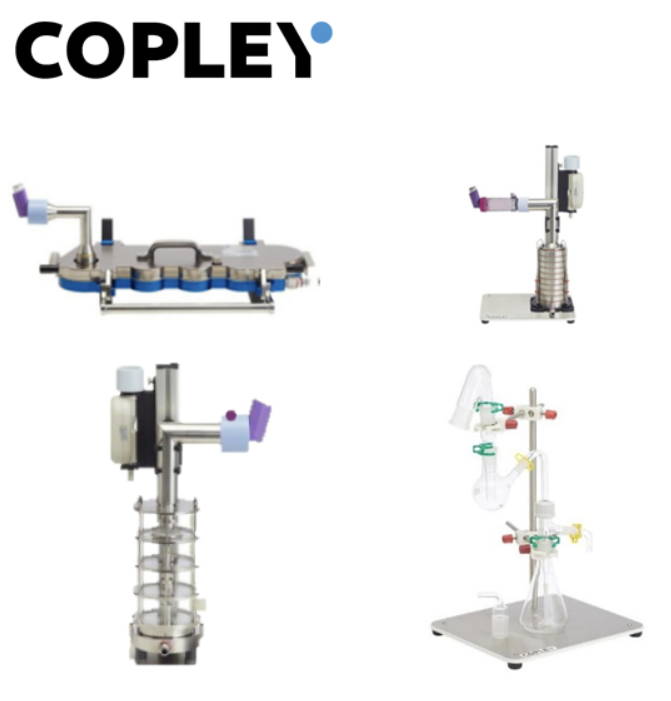
Inhalation Device Testing Equipment in Egypt
Choose reliable inhalation device testing equipment in Egypt for pharmaceutical development, inhaler performance testing, quality control and regulatory laboratory workflows.
Gemicatech supplies equipment for testing metered-dose inhalers, dry powder inhalers and nebulizers with technical guidance, quotation support, delivery coordination and after-sales service.
Looking for inhaler testing equipment?
Send us the inhaler type, dosage form, applicable testing standard, expected sample volume and laboratory location. Our team can help you select the right pharmaceutical inhaler testing system .
Request the Best Price Talk to an Expert Build Your QC LabArticle Sections
| Section | What You Will Learn |
|---|---|
| What Is Inhalation Device Testing? | The purpose of testing orally inhaled and nasal drug products. |
| Types of Inhalation Devices | The main inhaler and nasal product categories. |
| Delivered Dose Uniformity | How emitted drug dose consistency is evaluated. |
| Aerodynamic Particle Size Distribution | How particle-size distribution supports inhaler performance testing. |
| Main Testing Equipment | The equipment used to build a complete inhaler testing workflow. |
| Pharmaceutical Applications | How inhalation testing supports development and QC. |
| Buying Guide | The specifications to review before purchasing. |
| Inhaler QC Workflow | How inhaler testing fits into laboratory quality control. |
| FAQ | Answers to common technical and purchasing questions. |
What Is Inhalation Device Testing?
Inhalation device testing evaluates the performance of drug-delivery devices that administer medicines through the lungs or nasal passages.
The testing process can examine the amount of drug emitted from the device, the consistency of individual doses and the aerodynamic particle-size distribution of the aerosol or powder.
A complete inhaler testing system may include sampling apparatus, flow-control equipment, vacuum pumps, impactors, filters, accessories and analytical instruments.
Dose Performance
Evaluate the amount of drug delivered or emitted from individual doses.
Particle-Size Analysis
Assess the aerodynamic distribution of particles generated by the device.
Pharmaceutical QC
Support development, batch comparison, release testing and investigations.
Types of Inhalation Devices
Different inhalation products require different interfaces, adapters, airflow conditions and test configurations. The device type should be identified before selecting the test equipment.
| Device Type | Description | Testing Considerations |
|---|---|---|
| Metered-Dose Inhaler | Delivers a measured aerosol dose, commonly using a propellant. | Requires suitable mouthpiece adapters, sampling equipment and airflow control. |
| Dry Powder Inhaler | Delivers a powdered formulation using the patient’s inhalation effort. | Requires controlled airflow and suitable particle-size measurement equipment. |
| Nebulizer | Converts a liquid formulation into an inhalable aerosol. | Requires a test setup suitable for liquid aerosol generation and collection. |
| Soft Mist Inhaler | Produces a slow-moving aerosol cloud without a conventional propellant. | Requires device-specific adapters and an approved testing procedure. |
| Nasal Drug Product | Delivers a spray, aerosol or powder through the nasal passage. | Requires suitable nasal sampling and product-specific test accessories. |
Delivered Dose Uniformity Testing
Delivered Dose Uniformity evaluates the amount of active drug delivered from individual doses or actuations of an inhalation device.
In a typical test, the device is connected to a suitable sampling apparatus. A controlled airflow draws the emitted dose through the sampling system, where the drug can be collected and subsequently analyzed.
DDU testing can help laboratories assess dose consistency, identify device or formulation variation and support the evaluation of inhaler performance.
Aerodynamic Particle Size Distribution
Aerodynamic Particle Size Distribution describes how inhaled particles are distributed according to their aerodynamic behavior.
Particle size can influence where aerosolized drug particles are likely to deposit in the respiratory tract. For this reason, APSD is an important performance characteristic for many orally inhaled and nasal drug products.
Cascade impactors are commonly used to separate particles according to their aerodynamic properties. The collected fractions can then be analyzed to determine the drug mass associated with different stages.
- Andersen Cascade Impactor: Used for aerodynamic particle-size characterization.
- Next Generation Impactor: Supports particle-size measurement with a modern impactor configuration.
- Multi-Stage Liquid Impinger: Used for suitable aerosol and inhaler testing workflows.
- Glass Twin Impinger: Supports specific particle-fraction testing applications.
Main Inhalation Device Testing Equipment
A complete inhalation testing equipment setup depends on the product type, analytical method, laboratory workload and applicable regulatory requirements.
Dosage Unit Sampling Apparatus
A dosage unit sampling apparatus is used to collect emitted doses from suitable inhalation products for delivered-dose analysis.
Cascade Impactors
Cascade impactors separate particles according to aerodynamic properties and help laboratories determine particle-size distribution.
Flow Controllers
Critical-flow controllers and flow meters help establish the airflow conditions required by the approved testing method.
Vacuum Pumps
A suitable vacuum pump provides the airflow needed to draw the dose through the sampling or impactor apparatus.
Breath Simulators
Breath simulators can reproduce defined inhalation profiles for testing certain devices and formulations.
Mouthpiece Adapters and Accessories
Device-specific adapters, connectors and tubing help establish a controlled connection between the inhaler and the test apparatus.
| Equipment | Main Function | Selection Consideration |
|---|---|---|
| Sampling Apparatus | Collect emitted dose for analysis. | Device type, adapter and approved method. |
| Cascade Impactor | Measure aerodynamic particle-size distribution. | Stages, flow rate and product application. |
| Flow Controller | Control the airflow through the test system. | Required flow range and method compatibility. |
| Vacuum Pump | Generate the required airflow. | Flow capacity, stability and laboratory workload. |
| Breath Simulator | Reproduce defined inhalation profiles. | Device type, breathing profile and validation needs. |
Pharmaceutical Applications
Inhalation testing supports several stages of pharmaceutical product development and quality control.
- Formulation development: Compare active ingredients, excipients and formulation changes.
- Device development: Evaluate how device design affects dose delivery and aerosol performance.
- Generic product development: Compare inhaled products against the relevant performance requirements.
- Process optimization: Investigate manufacturing conditions and their effect on inhaler performance.
- Batch comparison: Identify variation between production batches.
- Stability studies: Monitor changes in delivered dose and particle-size performance over time.
- Quality control: Support routine performance testing and investigation of unexpected results.
USP and Pharmacopoeial Inhaler Testing
Laboratories may refer to applicable pharmacopoeial chapters when developing test procedures for aerosols, sprays and powders. USP <601> addresses performance quality tests for inhalation and nasal drug products, including delivered dose and relevant particle-size measurements.
The exact apparatus, flow conditions, sampling process, calculation method and acceptance criteria should be confirmed against the current approved method used by your laboratory.
How to Choose Inhalation Device Testing Equipment in Egypt
Identify the Device Type
Start by identifying whether the laboratory will test MDIs, DPIs, nebulizers, soft mist inhalers, nasal sprays or nasal powders.
Define the Required Test
Determine whether you need delivered-dose testing, aerodynamic particle-size distribution, inhaled dissolution testing, device performance testing or a combination of methods.
Review the Airflow Requirements
Confirm the required flow rate, pressure drop, test duration and vacuum-pump capacity for the selected device and procedure.
Check Sampling and Impactor Configuration
Ask which sampling apparatus, mouthpiece adapter, impactor, filter, accessories and validation tools are required.
Evaluate the Analytical Workflow
Review how collected drug fractions will be recovered, diluted and analyzed. The workflow may require analytical equipment such as HPLC or other validated methods.
Consider Automation
Automation can help laboratories reduce repetitive manual steps, improve consistency and organize larger testing workloads.
Ask About Qualification and Service
Confirm installation, operator training, qualification, verification, maintenance, spare parts and after-sales support before purchasing.
| Selection Factor | Why It Matters | Question for the Supplier |
|---|---|---|
| Device Type | Determines the required adapter and test configuration. | Does the system support MDI, DPI, nebulizer or nasal products? |
| Test Objective | Defines whether DDU, APSD or another test is required. | Which performance tests can the proposed system perform? |
| Airflow Control | Supports repeatable test conditions. | How are flow rate, pressure and test duration controlled? |
| Impactor or Sampler | Affects dose collection and particle-size measurement. | Which impactor, sampler and accessories are included? |
| Data and Reporting | Supports laboratory documentation and result review. | Are data export, reporting and audit features available? |
| Qualification Support | Helps establish reliable operation and method implementation. | Are installation, training and qualification services available? |
Inhaler Testing in the Pharmaceutical QC Workflow
Inhalation device testing is usually part of a broader pharmaceutical development and quality-control program. Depending on the product, laboratories may also perform assay, content uniformity, stability, dissolution or device-function testing.
For tablet testing equipment, visit Tablet Friability Tester , Tablet Hardness Testers , Tablet Disintegration Tester DTGi and Tablet Dissolution Tester DIS Series .
For related pharmaceutical testing solutions, visit Pharmaceutical Industry Solutions and Laboratory Testing Equipment .
Common Mistakes When Buying Inhaler Testing Equipment
- Choosing equipment without identifying the inhaler type.
- Confusing delivered-dose testing with particle-size testing.
- Ignoring airflow, pressure-drop and vacuum-pump requirements.
- Selecting an impactor without confirming the required flow conditions.
- Failing to check mouthpiece adapters and device-specific accessories.
- Ignoring drug-recovery and analytical requirements.
- Purchasing equipment without asking about qualification and validation.
- Focusing only on the initial price without considering service and spare parts.
Why Buy Inhalation Testing Equipment from Gemicatech?
Gemicatech supplies inhalation device testing equipment in Egypt for pharmaceutical development, research and quality-control laboratories.
- Support for pharmaceutical development and QC laboratories.
- Guidance on MDI, DPI, nebulizer and nasal-product testing workflows.
- Assistance with sampling, impactor and airflow-control requirements.
- Quotation support based on your device and testing procedure.
- Delivery and installation coordination in Egypt.
- Operator guidance and after-sales service.
Explore our Copley Brand Solutions and Pharmaceutical Industry Solutions .
Related Pharmaceutical Testing Products
Frequently Asked Questions
What Is Inhalation Device Testing?
Inhalation device testing evaluates the performance of inhalers, nebulizers and nasal drug products by measuring dose delivery, particle-size distribution or other product-specific characteristics.
What Is Delivered Dose Uniformity?
Delivered Dose Uniformity evaluates the amount of drug emitted from individual doses or actuations and helps assess dose consistency.
What Is Aerodynamic Particle Size Distribution?
Aerodynamic Particle Size Distribution describes the distribution of inhaled particles according to their aerodynamic behavior and is commonly measured using cascade impactors.
Which Devices Can Be Tested?
Depending on the system configuration, inhalation testing equipment may support MDIs, DPIs, nebulizers, soft mist inhalers, nasal sprays and nasal powders.
Does the System Need a Vacuum Pump?
Many inhaler testing workflows require a controlled airflow source or vacuum pump. The required capacity depends on the device, apparatus and approved testing method.
Can Gemicatech Supply Inhalation Testing Equipment in Egypt?
Yes. Gemicatech supplies inhalation device testing equipment in Egypt and can support product selection, quotation, delivery coordination and after-sales service.
Buy Inhalation Device Testing Equipment in Egypt
Send your device type, required test, applicable procedure, expected sample volume and data requirements. Get professional guidance and the best available quotation for a pharmaceutical inhaler testing system in Egypt .
Request the Best Price Contact on WhatsApp After-Sales Support