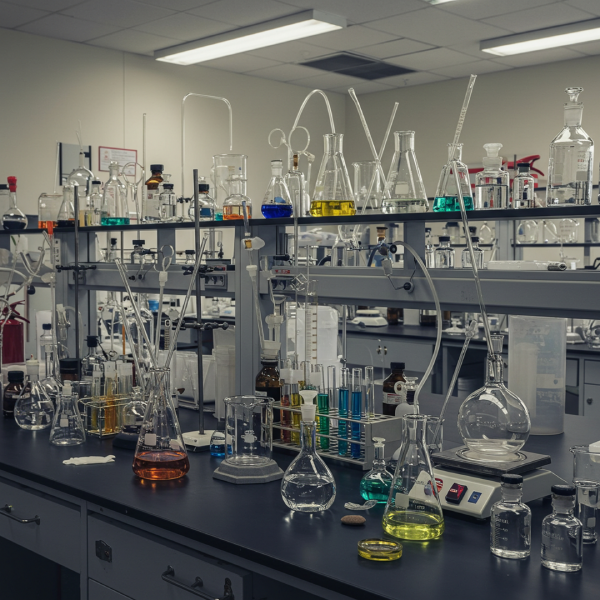
Laboratory Equipment Qualification in Egypt | IQ, OQ & PQ Guide
Buying a laboratory instrument is only the beginning. Before a critical incubator, oven, climate chamber, freezer or analytical system is used for regulated work, your laboratory needs documented evidence that the equipment is correctly installed, operates as intended and performs reliably for its actual purpose.
This guide explains laboratory equipment qualification in Egypt , including IQ, OQ and PQ, and shows how laboratories can organize the process before requesting installation, validation or technical support.
Planning equipment qualification for your laboratory?
Send us the equipment type, application, operating range, laboratory location and required documentation. Gemicatech can help you define the technical requirements and identify the appropriate support pathway.
Request Technical Guidance Talk to an Expert Request a Laboratory QuoteArticle Sections
| Section | What You Will Learn |
|---|---|
| What Is Equipment Qualification? | Why laboratories document equipment suitability before routine use. |
| Qualification vs. Validation and Verification | How these quality terms differ and where they overlap. |
| The Qualification Lifecycle | How URS, DQ, FAT, SAT, IQ, OQ and PQ fit together. |
| Installation Qualification | What is checked and documented during IQ. |
| Operational Qualification | How operating ranges and functions are tested during OQ. |
| Performance Qualification | How the equipment is confirmed under intended routine use. |
| Equipment Types That May Require Qualification | Examples across temperature control and analytical laboratories. |
| Documents and Evidence | The records commonly used to support a qualification package. |
| Choosing a Support Partner | What to ask a supplier before installation and qualification. |
| FAQ | Answers to common qualification and purchasing questions. |
What Is Laboratory Equipment Qualification?
Laboratory equipment qualification is the documented process used to show that an instrument or system is suitable for its intended purpose and performs according to defined requirements.
Qualification is not simply a certificate or a one-time installation check. It connects the laboratory’s user requirements with the equipment design, installation, operating functions and performance under routine conditions.
In a pharmaceutical, clinical, food, chemical or environmental laboratory, qualification helps answer a practical question:
The exact qualification approach depends on the equipment, intended use, risk level, applicable regulations, laboratory procedures and the amount of evidence required by the quality team.
Fit for Purpose
Confirm that the equipment matches the intended test, process or storage application.
Documented Evidence
Create traceable records showing what was checked, how it was tested and whether it passed.
Reliable Operation
Reduce uncertainty before the equipment is released for routine laboratory use.
Qualification vs. Validation and Verification
These terms are related, but they are not interchangeable. Using the correct term helps the laboratory define the right scope, protocol and acceptance criteria.
| Term | Main Question | Typical Focus |
|---|---|---|
| Qualification | Is the equipment suitable and properly established for its intended use? | Design, installation, operation and performance evidence. |
| Validation | Does a process, method or system consistently achieve its intended result? | Process, cleaning, analytical method, software or system performance. |
| Verification | Does the equipment or measurement continue to meet a defined requirement? | Periodic checks, performance checks and comparison against criteria. |
| Calibration | Does the instrument indication agree with a reference standard? | Measurement accuracy, traceability and adjustment where applicable. |
| Maintenance | Is the equipment kept in working condition? | Preventive service, repairs, cleaning and replacement of parts. |
A laboratory may use more than one of these activities during the equipment lifecycle. For example, an incubator may be qualified after installation, calibrated against suitable references, performance-verified periodically and maintained according to a service plan.
The Laboratory Equipment Qualification Lifecycle
A risk-based qualification lifecycle commonly begins before the equipment is purchased. The laboratory first defines what it needs, then confirms that the selected system can meet those requirements.
User Requirements Specification
The User Requirements Specification describes what the laboratory needs from the equipment. It may include the application, capacity, operating range, accuracy, environmental conditions, safety functions, data requirements, utilities and documentation.
Design Qualification
Design Qualification evaluates whether the proposed design and configuration can meet the approved user requirements. It may include a technical review of the model, accessories, software, materials, utilities and intended workflow.
Factory and Site Acceptance
Depending on the project, a factory acceptance test or site acceptance test may be used before or after delivery. These checks help confirm that the agreed equipment and installation conditions are ready for the next qualification stage.
IQ, OQ and PQ
IQ, OQ and PQ provide progressively stronger evidence: the equipment is installed correctly, operates within its defined functions and performs consistently under intended use. WHO guidance describes these stages as part of a structured qualification approach for equipment and systems. [374][376]
Installation Qualification: IQ
Installation Qualification documents that the equipment has been delivered, installed and identified according to the approved requirements and manufacturer instructions.
Typical IQ checks
- Equipment name, model and serial number.
- Purchase specification and approved configuration.
- Location and installation conditions.
- Electrical, water, gas, ventilation or network utilities.
- Required accessories and spare parts.
- Manufacturer manuals and technical documents.
- Software version and system identification, where applicable.
- Safety labels, alarms and basic installation conditions.
- Evidence of delivery, inspection and installation.
IQ does not prove that the equipment can perform every laboratory task. It confirms that the equipment is present, correctly identified and installed in accordance with the approved requirements.
Operational Qualification: OQ
Operational Qualification provides documented evidence that the equipment operates as intended across defined operating ranges and functions.
Typical OQ checks
- Start-up and shutdown functions.
- Control-panel operation and user access.
- Temperature, speed, pressure or humidity settings.
- Alarms and safety interlocks.
- Display, recording and communication functions.
- Operating limits and programmed methods.
- Repeatability of selected functions.
- Acceptance criteria for each challenge or test.
For example, OQ for a temperature-controlled chamber may challenge selected setpoints, alarms, controls and operating limits. OQ for a laboratory instrument may include defined functions, measurement modes and software operations.
Performance Qualification: PQ
Performance Qualification confirms that the equipment performs consistently under conditions that represent its intended routine use.
Typical PQ questions
- Does the equipment meet the required performance specification?
- Does it perform consistently with the intended load or sample type?
- Are the results repeatable over the defined test period?
- Does performance remain acceptable under routine operating conditions?
- Are the results documented and reviewed by the responsible team?
PQ should reflect the real application as closely as practical. An empty chamber may behave differently from a loaded chamber, and a simple test sample may not represent the most demanding routine use.
Equipment Types That May Require Qualification
Qualification can apply to many types of laboratory equipment. The required depth depends on the intended use and risk to product quality, sample integrity, data reliability or patient safety.
| Equipment Type | Typical Qualification Focus | Relevant Evidence |
|---|---|---|
| Laboratory Incubator | Temperature range, uniformity, stability, alarms and recovery. | IQ, OQ, temperature checks and performance under representative load. |
| Laboratory Oven | Temperature distribution, heating performance, safety and recovery. | Installation records, operating tests and temperature mapping evidence. |
| Climate Chamber | Temperature, humidity, stability, alarms and load response. | Qualification protocol, mapping data and approved acceptance criteria. |
| Laboratory Refrigerator | Temperature uniformity, stability, alarms and storage conditions. | Installation evidence, temperature verification and mapping records. |
| Viscometer | Measurement configuration, spindle, speed, range and repeatability. | Installation checks, operating tests, standards and method records. |
| pH Meter | Electrode suitability, calibration, temperature and measurement range. | Calibration records, buffer checks and approved operating procedure. |
| Pharmaceutical Testing Instrument | Test method, operating conditions, accessories and data recording. | IQ/OQ/PQ evidence, method suitability and approved test records. |
The product links above are examples of how a qualification guide can direct readers to relevant equipment without turning the article into a product catalogue. The primary purpose of this page is to explain qualification, while the product pages remain responsible for model-specific specifications and purchase intent.
Qualification and Temperature Mapping
Temperature mapping is a focused performance study used to understand temperature distribution across a controlled space. It can be relevant to incubators, refrigerators, freezers, ovens and climate chambers.
Mapping should not be treated as a replacement for the full qualification lifecycle. Depending on the application, it may form part of OQ or PQ, or serve as a separate verification activity after installation, relocation, maintenance or a significant change.
For more information about temperature distribution and controlled-temperature equipment, read Memmert Temperature Mapping Solutions for Egyptian Labs .
Qualification Documents and Evidence
A qualification package should make it possible for an independent reviewer to understand what was required, what was tested, what evidence was collected and whether the equipment was accepted.
Common documents
- User Requirements Specification.
- Functional or design specification.
- Risk assessment.
- Approved qualification protocol.
- Installation checklist.
- Operating-function test records.
- Performance test results.
- Calibration certificates and reference standards.
- Equipment manuals and technical drawings.
- Software and data-integrity documentation, where applicable.
- Deviation and corrective-action records.
- Final qualification report and approval.
What a good protocol should define
- Purpose and scope.
- Equipment identification.
- Responsibilities.
- Required utilities and environmental conditions.
- Test steps and methods.
- Instruments and reference standards.
- Acceptance criteria.
- Data-recording requirements.
- Deviation-handling process.
- Final approval and release conditions.
Qualification for New, Relocated and Existing Equipment
New equipment
New equipment normally requires a planned qualification approach before it is released for critical routine use. The scope may start with user requirements and continue through installation, operation and performance testing.
Relocated equipment
Moving an instrument can affect utilities, level, airflow, vibration, temperature recovery, network connections or surrounding conditions. A documented impact assessment should determine which checks need to be repeated.
Existing equipment
Existing equipment may require retrospective qualification, periodic review, requalification or performance verification when historical documentation is incomplete or the intended use has changed.
After maintenance or modification
A major repair, software change, replacement of a critical component or modification to the operating range may require documented assessment before the equipment returns to service.
How to Choose a Qualification Support Partner
Equipment qualification is easier when the laboratory and supplier agree on responsibilities before delivery. The supplier may provide technical documentation and installation support, while the laboratory remains responsible for approving its intended use, procedures and acceptance criteria.
Questions to ask before purchasing
- Can the supplier provide model-specific technical documentation?
- Are installation and commissioning included?
- Can the supplier support IQ and OQ activities?
- Which tests require an independent laboratory or quality team?
- Are calibration certificates and reference standards available?
- Can the system be configured for the intended laboratory method?
- Are operator training and SOP support available?
- What happens after a failed qualification test?
- Are service, spare parts and verification support available in Egypt?
Gemicatech’s existing laboratory equipment after-sales service in Egypt page covers installation, qualification, calibration, training, preventive maintenance and technical support. This article should link to that service page for execution and support details, while keeping qualification concepts as its primary subject.
Qualification, Training and Routine Use
Qualification evidence is only useful when the equipment remains under control during daily operation. Staff should understand the approved operating procedure, routine checks, alarm response, cleaning requirements and documentation expectations.
Training should be specific to the equipment and the laboratory method. It should not be limited to turning the instrument on and off. Users should know how to recognize abnormal conditions and when to stop a test or notify the responsible team.
Common Mistakes in Laboratory Equipment Qualification
- Starting qualification after the equipment has already been used for critical work.
- Purchasing equipment without defining user requirements.
- Treating a calibration certificate as complete qualification evidence.
- Copying generic IQ/OQ/PQ protocols without adapting them to the actual equipment and intended use.
- Performing tests without pre-approved acceptance criteria.
- Ignoring load conditions, sample types or real operating workflows.
- Failing to document deviations and corrective actions.
- Forgetting to assess relocation, major maintenance or software changes.
- Treating qualification as a one-time activity with no periodic review.
Why Qualification Matters for Egyptian Laboratories
Laboratories in Egypt serving pharmaceutical, food, chemical, environmental, cosmetic, clinical and research applications often need more than a catalogue specification. They need equipment that can be installed correctly, operated consistently, supported locally and documented in a way that fits their quality system.
A structured equipment qualification process helps connect the purchased instrument with the laboratory’s real workflow, staff, methods, records and long-term service plan.
How Gemicatech Can Support Your Qualification Plan
Gemicatech supports laboratories with equipment selection, installation, commissioning, operator training, technical documentation and after-sales coordination for a range of laboratory and analytical equipment.
Depending on the equipment and project scope, support may include:
- Application and equipment selection.
- Technical specification review.
- Installation and commissioning.
- Operational guidance and user training.
- Support with qualification documentation.
- Temperature and humidity performance checks.
- Calibration and verification coordination.
- Preventive maintenance and spare-parts support.
For a complete pharmaceutical testing setup, see Pharma Tablet Testing Equipment Egypt .
Recommended Buying Checklist
| Question | Why It Matters |
|---|---|
| What is the intended use? | Defines the performance requirements and qualification scope. |
| What operating range is required? | Determines the equipment configuration and OQ test range. |
| What acceptance criteria apply? | Establishes how the equipment will be accepted or rejected. |
| What documents are required? | Prevents missing manuals, certificates, protocols or records. |
| Who performs each activity? | Separates supplier, laboratory, quality and independent-service responsibilities. |
| What happens after installation? | Ensures training, verification, maintenance and periodic review are planned. |
Frequently Asked Questions
What is laboratory equipment qualification?
It is the documented process used to show that laboratory equipment is correctly installed, operates as intended and performs consistently for its approved purpose.
What do IQ, OQ and PQ stand for?
IQ means Installation Qualification, OQ means Operational Qualification and PQ means Performance Qualification.
Is IQ/OQ/PQ required for every laboratory instrument?
The required scope depends on the equipment, intended use, risk level, quality system and applicable regulations. Critical equipment used for regulated or safety-related work usually requires a more structured qualification approach.
Is calibration the same as qualification?
No. Calibration checks measurement agreement with a reference standard, while qualification provides broader evidence that the equipment is suitable, correctly installed, functional and reliable for its intended use.
Is temperature mapping part of qualification?
It can be part of operational or performance qualification, or a separate verification activity, depending on the equipment and approved protocol.
When should equipment be requalified?
Requalification may be considered after relocation, major maintenance, critical component replacement, software changes, extended downtime, repeated failures or a significant change in intended use.
Can Gemicatech support laboratory equipment qualification in Egypt?
Gemicatech can support equipment selection, installation, commissioning, training, documentation and technical coordination. The final qualification approval and acceptance criteria remain the responsibility of the laboratory’s quality system and authorized personnel.
Start Your Equipment Qualification Plan
Send the equipment type, model, intended application, operating range, laboratory location and documentation requirements. Gemicatech can help you identify the next technical step and prepare a suitable quotation or support plan.
Request Technical Guidance Contact on WhatsApp View Technical Support